A Practical Review of the 'Children Looking at a River' Embroidery Design
The First Impression: Soft Charm and a Storytelling Moment
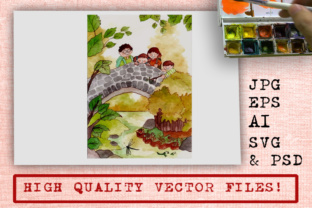
When I first opened the ‘Children Looking at a River’ file, my immediate thought was, “This feels like a gift.” It’s not a loud or graphic design; it’s a gentle, watercolor-inspired illustration that captures a quiet, observational moment. The mood is nostalgic and peaceful. The soft, blended shapes and the organic, flowing lines of the river and the children’s forms mean this isn’t a design built for harsh, geometric satin stitch borders. It’s a piece that begs for a more artistic, textured interpretation through embroidery.
This design has a built-in personality that leans towards warmth and innocence. The level of detail is interesting—it’s not overly intricate, which is actually a positive for many embroidery projects. It suggests forms and shapes rather than defining them with hard lines, which gives you, the embroiderer, some creative leeway in how you choose to stitch it. My designer’s instinct tells me this belongs on items meant to convey care, personalization, or a handmade story. Think of a custom embroidered pillow cover for a nursery, a sentimental wedding gift of a tea towel, or a baby item like the back of a linen bib.
Where This Design Shines in Real Projects
I envisioned a specific real-life scenario to test its application: preparing a custom embroidered tote bag for a boutique client who wanted a nature-themed, non-generic gift item. The ‘Children Looking at a River’ design felt perfect. Its illustrative quality elevates a simple canvas tote into a piece of craft business art. On a sweatshirt, particularly a light-colored, high-quality cotton blend, this design would stitch out with a lovely, painterly effect, avoiding the stiff, plasticky look some dense designs can have.
For small shop merchandise like aprons or kitchen towels, it adds charm without being kitschy. As a embroidered patch, it would be absolutely beautiful, though I’d consider its size carefully—it needs space to breathe and show its composition. For holiday gifts like blankets or pillow covers, it offers that timeless, non-seasonal appeal that people appreciate year-round. In digital product previews and printable mockups for Etsy sellers, this kind of artwork creates an immediate emotional connection, suggesting the handmade quality of the final finished product.
Considerations for Crafters and Commercial Use
The watercolor aesthetic means color contrast and stitch density are your main tools. On dark fabric, you’ll need to be strategic with your thread colors to ensure the lighter tones of the river and children’s clothing don’t get lost. A careful test on scrap fabric is essential. Because it’s an illustration, its true test will be on the actual material. Textured fabrics like linen will enhance its artistic feel, while very thin fabric might require a robust stabilizer to handle any larger fill stitch areas.
I would avoid very small hoop sizes. Squeezing this scene into a tiny area on a cap or the curved surface of a hat might compress those lovely flowing lines and make the children’s figures less recognizable. It’s also not a design for products needing extremely frequent, harsh washing, as the softer, potentially less dense stitching might be more vulnerable over time compared to a bold, solid logo.
The Impact on Your Business and Your Customer
From a small business owner perspective, using ‘Children Looking at a River’ correctly can significantly boost product value and customer trust. It shows thoughtfulness and a selection of design beyond basic clip art. It enhances handmade presentation and, if used consistently in a niche (like nature-themed gifts), can strengthen brand consistency. Its inherent giftability is a huge plus—it looks like something chosen specially, not mass-produced.
For the buyer, it creates engagement through storytelling. They’ll see a scene, not just a pattern. This builds professionalism in your craft business and makes your Etsy listings or craft fair products stand out. As a digital embroidery file for other designers, it’s a versatile design asset because its application is so broad, from apparel decorators to makers of nursery decor.
Essential Designer Notes Before You Stitch
My practical advice before you commit this to a client project or your own small shop product:
- Always, always test the design on scrap fabric first. Use the same material and weight as your final project.
- Check thread color contrast meticulously. The watercolor style means some edges are soft; your thread choices will define the clarity.
- Review stitch density in your machine embroidery software. Are large areas meant to be solid fill stitch, or a lighter running stitch texture? This affects both look and production time.
- Inspect small details, like the children’s hands and the river’s flow. Will they stitch out cleanly at your intended size?
- Test it in black and white mockups to understand its form without color, and compare how it looks on both light and dark fabric backgrounds.
- Use the proper stabilizer for your chosen fabric. This is key for maintaining the integrity of the illustration.
- As a creative entrepreneur, confirm licensing before selling finished items. Can this graphics file be used for commercial embroidery projects? The product description notes its wide range of uses, but verifying the specifics protects your business.
Final Thoughts: A Design with Heart
‘Children Looking at a River’ is more than just an embroidery file. It’s a scene that brings a quiet narrative to your work. In my judgment, it’s best used where that narrative matters—on personalized gifts, boutique products, and items where the embroidery is the focal point of the handmade product, not just a decoration. It won’t suit every project, particularly those requiring hard-edged, high-impact branding. But for the crafter, maker, or apparel decorator looking to infuse a project with warmth and a touch of painted beauty, it’s a wonderfully fitting choice. Approach it with an artist’s eye for thread and fabric, and your finished piece will carry that charm perfectly from the digital screen to the stitched fabric.